
Daily Meditation Routine Guide for Flow and Balance
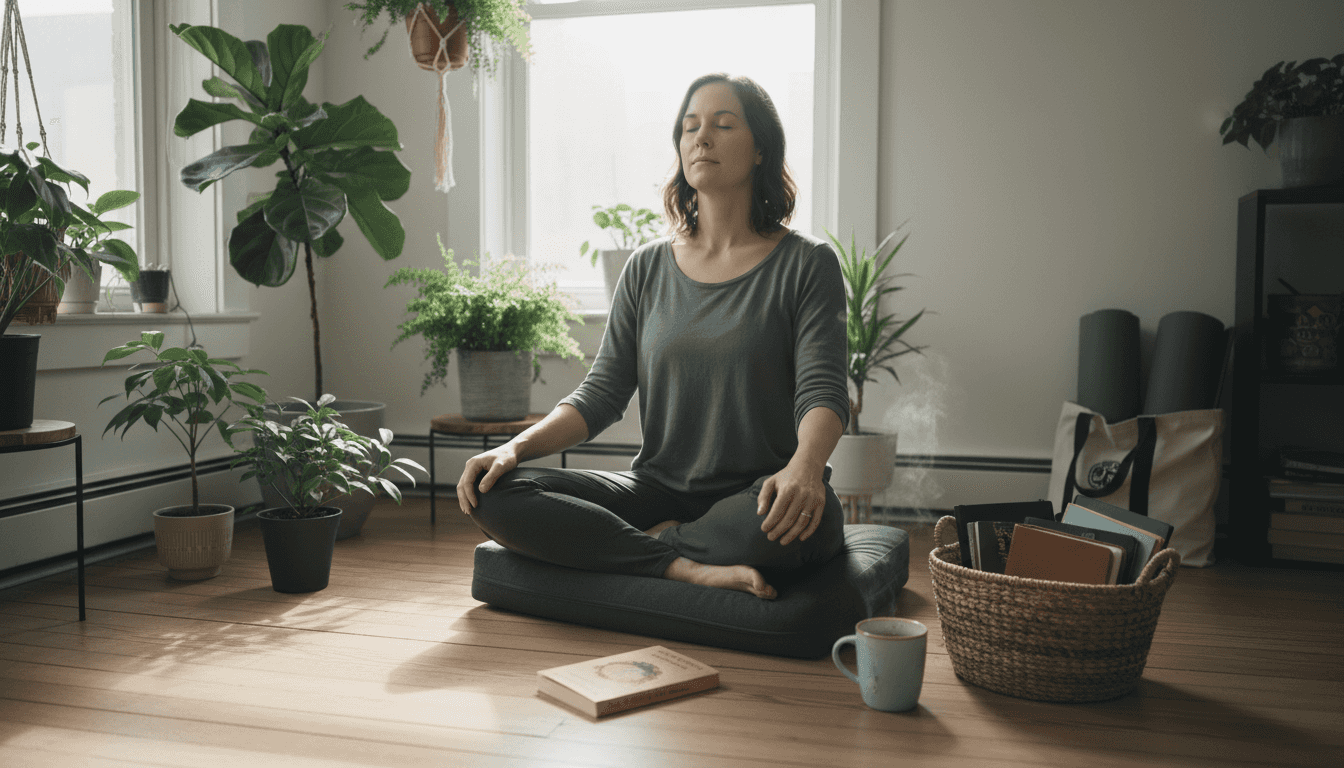
Managing constant deadlines and juggling creative projects can leave you feeling stretched and reactive. For busy professionals and entrepreneurs, finding daily time for self-renewal often seems out of reach. Creating a dedicated meditation space at home and establishing a short routine transforms sporadic attempts into a reliable ritual that helps your mind return to calm. This guide reveals practical steps to build a consistent practice using guided meditation, personalized timing, and reflective tools, so you harness real stress relief and personal growth.
Table of Contents
Quick Summary
Key Insight | Explanation |
1. Create a dedicated space | A designated meditation corner enhances focus and signals calm, promoting better practice consistency. |
2. Consistency over timing | Meditating at the same time daily is more important than the time itself, establishing routine and reducing effort. |
3. Use guided meditations | Following a guided meditation structure helps reduce anxiety and provides direction, especially for beginners. |
4. Reflect through journaling | Journaling post-meditation transforms insights into lasting awareness, enhancing understanding and growth. |
5. Assess and adjust regularly | Weekly reflections on your practice help identify patterns and make necessary adjustments for better outcomes. |
Step 1: Set Up a Dedicated Meditation Space
Your meditation practice thrives when it has a home. A dedicated space signals to your mind and body that this corner exists solely for presence and calm. You don’t need an entire room—even a small, quiet corner can become your sanctuary.
Start by choosing your location strategically. Look for a spot with natural light, minimal outside noise, and good air circulation. This might be a bedroom corner, a nook by a window, or even a section of your home office. The key is privacy. When your family or coworkers know this space belongs to your practice, they’re more likely to respect it.
Next, think about comfort and support. You’ll need something to sit on—a meditation cushion works best for floor sitting, but a bench or a comfortable chair works just as well. Your body shouldn’t fight gravity or struggle to maintain posture. Tension in your hips or knees pulls your focus away from breath and awareness. Test different seating options before committing.
Personalize the space to reinforce the meditative state. Consider adding these elements:
Here’s how different meditation space elements enhance your practice:
Element | Purpose | Psychological Impact |
Soft lighting | Sets a calming mood | Signals relaxation to the mind |
Plants | Freshens air, adds life | Boosts well-being and focus |
Meditation cushion | Provides physical support | Promotes comfort and stability |
Minimal decoration | Reduces stimulation | Improves concentration |
Soft lighting like candles or dimmable lamps to create calm
Plants to bring living energy and improve air quality
An altar table (optional) to hold meaningful items
Minimal decoration to avoid visual clutter
Your space should feel inviting, not cluttered. Creating the perfect home meditation space involves balancing comfort with simplicity so nothing distracts you from your inner work.
A dedicated space transforms sporadic meditation attempts into a consistent ritual your mind recognizes and craves.
Once your space is ready, your nervous system begins conditioning itself. Each time you sit there, your brain releases a subtle signal: “This is time for depth.” That association builds over days and weeks until stepping into your meditation spot automatically begins calming your mind.
Pro tip: Place your meditation space away from screens and work areas to create psychological separation between meditation and productivity, helping your mind fully transition into a restorative state.
Step 2: Select Your Ideal Practice Time
The best time to meditate is the time you’ll actually stick with. Many busy professionals wrestle with when to fit meditation into packed schedules, but the truth is simpler than you think. Consistency matters far more than the specific hour.
Start by assessing your natural rhythms. Are you a morning person who wakes alert and focused? Morning meditation can set a calm tone before emails and meetings flood your attention. Feeling scattered by evening? An after-work session helps reset your nervous system before you collapse. Some people find their sweet spot right before bed, using meditation to transition from stimulation to sleep.

The research is clear: short daily sessions of 5-15 minutes effectively manage stress and sharpen focus. You don’t need an hour. Five minutes daily beats an hour once a week because your brain recognizes the signal: this is a regular practice, not a occasional experiment.
Consider these timing options based on your lifestyle:
Summary of practice time options and their benefits:
Time of Day | Typical Duration | Benefit |
Morning | 5-10 minutes | Sets a calm daily tone |
Midday | 5-15 minutes | Breaks up stress buildup |
Evening | 10-15 minutes | Facilitates deeper rest |
Transition | 5 minutes | Eases into new activities |
Morning (5-10 minutes) before checking your phone, while your mind is fresh
Midday break (5-15 minutes) to interrupt stress accumulation and reset focus
Evening (10-15 minutes) to release tension before dinner or sleep
Transition times (5 minutes) between work and home, or before important meetings
Once you select your window, write it down. Treat it like a non-negotiable appointment with yourself. Your nervous system learns through repetition. When you meditate at the same time daily, your body begins expecting and craving that calm. Within weeks, stepping into your meditation space at that hour triggers the relaxation response automatically.
Establishing a consistent routine makes meditation a natural part of daily life, not another task demanding willpower.
Start small and test what works. If morning feels rushed, try evening. If evening feels heavy, try midday. You’re not searching for perfection; you’re building a rhythm that fits your real life.
Pro tip: Anchor your meditation time to an existing daily habit—right after coffee, before lunch, or after your workout—so the new practice piggybacks on established routines and requires zero additional willpower.
Step 3: Follow a Guided Meditation Sequence
A guided meditation removes the pressure of figuring out what to do next. Instead of sitting in silence wondering if you’re doing it right, a voice leads you through each phase, creating structure and reducing anxiety for beginners.
Start by finding a guided meditation that matches your needs. Are you wrestling with racing thoughts? Try a body scan meditation to anchor awareness in physical sensation. Struggling with sleep? A breathing focus sequence calms your nervous system. Feeling disconnected from yourself? Guided meditations addressing self-compassion help cultivate inner kindness and resilience.
Most guided sequences follow a consistent structure that supports progressive deepening:
Opening grounding (1-2 minutes) to settle your body and signal the start
Breath focus (3-5 minutes) to anchor awareness and calm the nervous system
Guided imagery or body awareness (5-10 minutes) for deeper mental quieting
Integration (2-3 minutes) to gently return awareness before ending
Press play and let go of control. Your only job is to follow the voice’s gentle instructions without judgment. If your mind wanders, that’s not failure—that’s the practice. You notice the wandering and return to the guide’s voice. That noticing itself is meditation.
Listen with gentle attention, not rigid focus. The guide might invite you to visualize nature, scan your body for tension, or repeat calming phrases. Don’t force visualizations if they don’t come naturally. Some people see vivid images; others feel sensations or hear internal sounds. All experiences are valid.
Following a guided sequence provides the structure and instruction that supports sustainable practice, especially when you’re building consistency.
After the meditation ends, pause before jumping up. Sit quietly for 30 seconds, notice how you feel, then slowly return to your day. This transition time embeds the calm into your nervous system rather than jolting yourself back to stress.
Pro tip: Try the same guided meditation for at least 5-7 consecutive days before switching to another, allowing your mind to deepen into familiarity and unlock progressively subtle layers of insight with each repetition.
Step 4: Integrate Insights with Reflective Journaling
Meditation plants seeds in your consciousness, but journaling helps them grow. Without reflection, insights fade like dreams upon waking. Writing transforms fleeting awareness into lasting understanding that shapes your choices and behavior.
Open your journal immediately after meditation, while the experience is still fresh. You don’t need eloquence or perfect grammar. Write whatever surfaces: sensations, emotions, thoughts, or even confusion. Did your mind feel quiet or restless? Did a particular phrase from the meditation stick with you? Did you notice tension releasing from specific body areas?
Reflective journaling supports metacognition by helping you monitor and evaluate your learning and mental patterns. As you notice what happens in meditation, you deepen self-awareness and understand how to adjust your practice for better results.
Consider these journaling prompts to guide your reflection:
What mental or emotional state did I notice during meditation?
Which instruction or visualization resonated most with me?
What resistance or ease did my body show?
How do I feel now compared to before I meditated?
What insights emerged about my patterns or beliefs?
Don’t analyze or judge what emerges. Your journal is a private space for honest observation, not performance. Some days you’ll write paragraphs; other days a single sentence captures everything. Both are complete practices.
Integrating meditation insights through writing transforms temporary experiences into lasting self-knowledge and behavioral change.
Over weeks, patterns emerge. You notice certain times trigger deeper practice. Specific visualizations create powerful shifts. Your resistance gradually dissolves as you see progress documented on the page. This visible evidence motivates consistency and shows you’re genuinely changing.
Review your entries weekly or monthly. You’ll witness your own evolution. The clarity compounds. The insights deepen. Your meditation practice transforms from a wellness task into a genuine conversation with yourself.
Pro tip: Date each journal entry and set a timer for 3-5 minutes of writing to prevent overthinking; this timeframe captures raw insights without allowing your analytical mind to edit away authentic discoveries.
Step 5: Assess Daily Progress and Adjust Accordingly
Progress in meditation isn’t always linear. Some days you’ll feel calm; other days your mind races relentlessly. Both are valuable data. The key is noticing patterns and adjusting your approach based on what actually works for you, not what you think should work.
Each week, spend 10 minutes reviewing your meditation journal and noting what shifted. Did certain times of day produce deeper states? Did specific guided meditations resonate more? Are you sleeping better? Feeling less reactive in stressful moments? Noticing more joy or clarity? Track these behavioral and emotional changes.
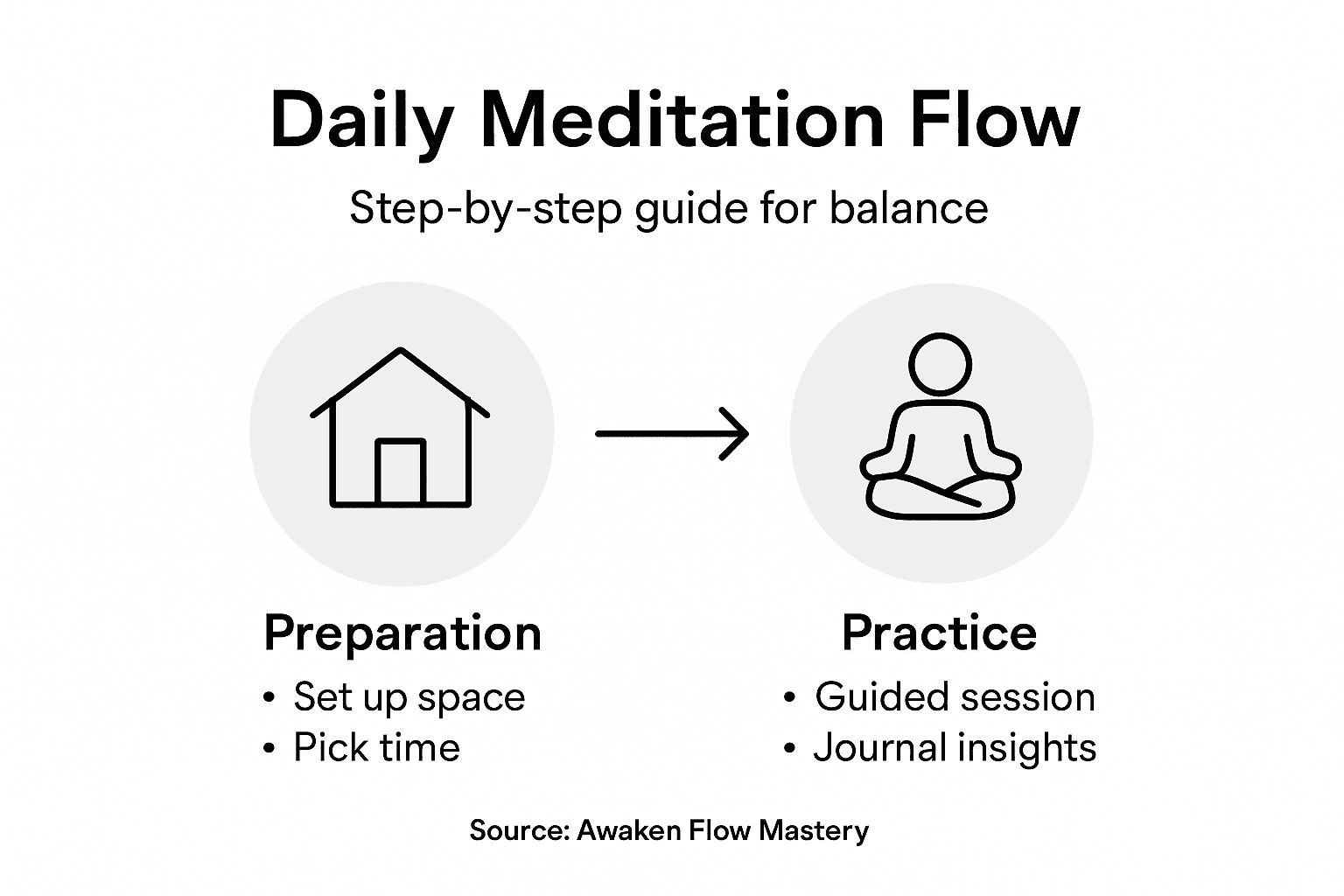
Be honest about challenges too. Regular assessment of meditation’s impact on stress and mood helps ensure your practice supports your well-being without creating additional strain. Some people experience temporary anxiety or restlessness as suppressed emotions surface. This is normal healing work, but if it intensifies, adjusting your duration or style matters.
Evaluate these dimensions of your practice:
Physical response: Better sleep, less tension, calmer nervous system?
Mental clarity: Sharper focus, fewer scattered thoughts, easier decision-making?
Emotional resilience: Less reactivity, greater patience, more compassion?
Motivation: Do you look forward to meditation or avoid it?
Consistency: Are you sustaining your daily rhythm or slipping?
Based on what you observe, adjust intelligently. If mornings feel rushed, shift to evening. If 10 minutes feels too long, try 5. If body scans leave you tense, switch to breath-focused meditations. If one guide’s voice grates on you, find another. Your practice must fit your life and temperament, not fight them.
Progress compounds when you stay curious, honest about what works, and willing to experiment without attachment to initial plans.
Progress isn’t about achieving a perfect meditative state. It’s about noticing you snap at your partner less, sleep more soundly, or handle deadlines with greater clarity. These real-world shifts prove your practice is working.
Pro tip: Create a simple weekly tracking sheet with ratings (1-5) for sleep quality, stress levels, focus, and mood, allowing you to spot patterns and see correlations between specific meditation types and your measurable improvements.
Unlock Consistent Flow and Balance With Personalized Meditation Support
The article highlights the common challenges of establishing a daily meditation routine including finding the right space, selecting ideal practice times, and integrating insights through journaling. Many face obstacles like inconsistent schedules, difficulty managing racing thoughts, and uncertainty about how to deepen their practice effectively. If you are seeking a structured approach that combines guided meditation, energy alignment, and reflective practices to overcome these barriers, you are not alone.
Awaken Flow Mastery offers a comprehensive 30-day guided meditation program designed to support you in building lasting flow states and balance. With expertly crafted audio sessions, intuitive journaling prompts, and sound frequency integration, this program helps you transform your meditation from a sporadic attempt into a powerful daily ritual that nurtures emotional well-being and personal growth.

Experience the difference of a program rooted in over a decade of energy work expertise. Start your journey now at Awaken Flow Mastery and access practical tools to align your energetic field and awaken your higher self naturally. Discover how easy it is to embed meditative insights into your daily life and enjoy renewed clarity, calm, and focus. Begin today and commit to your inner healing with guidance and support every step of the way.
Explore the full program at Awaken Flow Mastery and take the first step toward consistent, transformational meditation.
Frequently Asked Questions
How can I create a dedicated meditation space at home?
To create a dedicated meditation space, choose a quiet corner with natural light and minimal distractions. Set up comfortable seating, like a meditation cushion or chair, and personalize the area with soft lighting and calming decorations.
What is the best time of day to meditate for consistency?
The best time to meditate is whenever you can commit to it consistently. Evaluate your daily schedule and select a specific time that fits comfortably—whether that’s morning, midday, or evening—to create a lasting habit.
How do I find the right guided meditation for my needs?
To find the right guided meditation, identify what you want to address, such as stress relief or better sleep. Search for specific styles like body scans or breathing focus to match your goals, and listen to samples to see which resonates with you.
What should I journal about after meditating?
After meditating, journal about your experiences to deepen your insights. Write about your thoughts, feelings, or any notable sensations during meditation, focusing on what stands out to you or any changes you notice in your state of mind.
How do I assess my progress in meditation?
To assess your meditation progress, review your journal entries weekly. Look for changes in physical responses, mental clarity, emotional resilience, and overall motivation to ensure your practice supports your well-being effectively.
What adjustments can I make if my meditation practice feels stagnant?
If your meditation practice feels stagnant, consider adjusting your practice time, duration, or style. Experiment with different guided meditations or reposition your space to reignite interest and improve your results.
Recommended

Comments