
Guide to Intuitive Journaling: 60% Better Balance 2026

Ever feel overwhelmed by swirling thoughts and unsure how to access your inner wisdom clearly? Intuitive journaling combines unfiltered writing with intentional prompts to unlock subconscious insights, supporting emotional balance and spiritual growth. This guide shows you how to blend journaling with meditation and energy work, creating a powerful practice for personal transformation and authentic self-awareness. You’ll learn practical steps, avoid common pitfalls, and discover measurable benefits emerging in just weeks.
Table of Contents
Key Takeaways
Point | Details |
Core practice | Intuitive journaling blends freewriting and targeted prompts to unlock subconscious insights naturally. |
Sacred space | Creating a dedicated journaling space and ritual boosts habit formation by 60%. |
Writing technique | Continuous 5-15 minute writing without editing enhances emotional regulation and intuitive access. |
Avoid overthinking | Skipping over-intellectualization deepens emotional connection and reveals authentic insight. |
Timeline | Consistent journaling over 4-6 weeks reduces anxiety and improves self-trust measurably. |
Introduction to Intuitive Journaling
Intuitive journaling is a unique blend of stream-of-consciousness writing combined with intentional prompts designed to access your inner awareness. Unlike standard journaling that records daily events, this practice focuses on uncovering subconscious patterns, emotions, and spiritual insights. Research links expressive writing to enhanced brain activity in areas governing emotional regulation and self-reflection.
This practice offers several unique benefits for personal growth:
Emotional balance through authentic expression without judgment
Spiritual awakening support by connecting to higher self and energetic field
Enhanced self-awareness revealing unconscious beliefs and intuitive guidance
Reduced stress hormones and anxiety symptoms measurably within weeks
Writing continuously for 5-15 minutes without editing accesses subconscious intuition and reveals authentic insights. When combined with meditation and energy work, intuitive journaling becomes a holistic tool for transformation. The synergy between calming the mind through meditation and exploring it through writing creates powerful momentum for spiritual growth and emotional healing.
Many practitioners find that jog stress hormones naturally through this daily practice. The key is approaching writing as a sacred ritual rather than a task, allowing your pen to become a bridge between conscious awareness and deeper wisdom. This method works regardless of writing skill because the goal is exploration, not perfection.
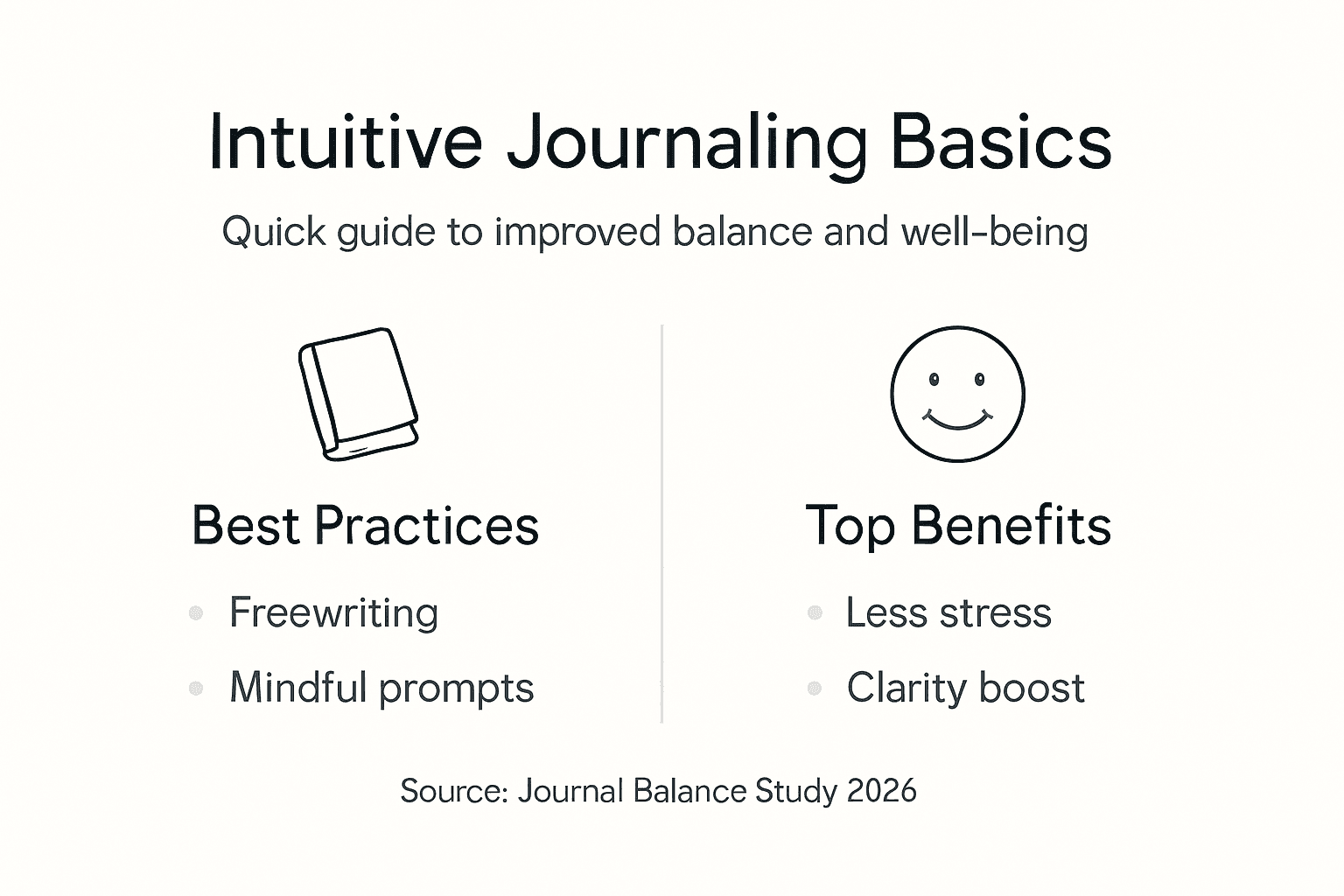
Prerequisites and Setting the Stage
Before starting your intuitive journaling practice, you need a few essential elements to create the optimal foundation. First, designate a quiet, distraction-free space where you feel comfortable and safe exploring emotions. Choose either a physical journal or digital app based on your preference. Allocate approximately 15 minutes daily for uninterrupted practice.
Begin each session with basic meditation or breathing exercises to calm your mind. Even three minutes of conscious breathing shifts your nervous system from reactive to receptive mode. This preparation amplifies your ability to access intuitive insights and write from a centered place.
Creating a sacred journaling space and ritual enhances receptivity to intuition and deepens the journaling experience. Simple elements like lighting a candle, playing soft music, or setting an intention signal your subconscious that this time is dedicated to inner work. Studies suggest consistent rituals improve adherence by up to 60%, making the practice sustainable long term.
For beginners feeling overwhelmed, start with simple gratitude journaling. Write three things you appreciate each morning to build positive momentum and familiarity with the practice. This gentle entry point reduces resistance and establishes the habit before diving into deeper emotional exploration.
Pro Tip: Consider exploring our meditation routine guide to establish a calming pre-journaling ritual that enhances your receptivity and focus.
Step-by-Step Guide to Intuitive Journaling
Follow these five actionable steps to establish and deepen your intuitive journaling practice:
Prepare your sacred environment and settle your mind. Light a candle, sit comfortably, and spend 3-5 minutes on meditation or conscious breathing. This shifts you from busy thinking to receptive awareness.
Write continuously for 5-15 minutes without stopping. Let your pen move freely across the page without censoring, editing, or judging what emerges. Writing continuously for 5-15 minutes without editing accesses subconscious intuition and reveals authentic insights that logical thinking often blocks.
Use intuitive prompts focused on sensations and emotions. Ask yourself questions like “What does my body need right now?” or “What emotion wants my attention today?” These prompts direct awareness inward rather than toward external events.
Review entries regularly to recognize patterns. Weekly or monthly reflection reveals recurring themes, intuitive hits, and emotional cycles you might miss in daily sessions. Notice which insights led to positive changes in your life.
Combine journaling with meditation or energy work. Schedule your writing immediately after meditation to capture insights while they’re fresh. This synergy deepens spiritual alignment and embeds awareness into daily life.
Additional prompts to deepen intuition include:
What is my inner wisdom trying to tell me?
Where do I feel blocked or resistant in my body?
What would my highest self say about this situation?
What three things brought me joy or peace today?
Pro Tip: Explore mindful journaling examples to see how others structure their practice and discover new approaches that resonate with your personal growth journey.
Common Mistakes and How to Fix Them
Even experienced practitioners encounter obstacles that limit their journaling effectiveness. Understanding these pitfalls helps you maintain intuitive flow and emotional connection.
Mistake 1: Over-editing or censoring while writing. When you pause to fix spelling, rephrase sentences, or judge your thoughts, you interrupt the intuitive stream. Your inner critic activates, blocking subconscious insights from surfacing. Fix this by committing to continuous writing without lifting your pen or stopping to think. Let grammar mistakes and messy thoughts flow onto the page uncensored.

Mistake 2: Inconsistent practice reduces habit formation. Sporadic journaling prevents your subconscious from recognizing this as a safe space for expression. Your mind needs regular signals that this time is dedicated to inner exploration. Fix this by establishing a daily ritual at the same time each day. Morning sessions work well because your mind is fresh and less cluttered by daily concerns.
Mistake 3: Over-analyzing disconnects from emotional essence. Avoid the pitfall of over-intellectualizing journal entries which can disconnect from the emotional and intuitive core of the practice. When you analyze why you feel something instead of simply feeling it, you shift from heart to head. Fix this by focusing on sensations, emotions, and physical feelings rather than logical explanations.
Research shows that creating meaningful rituals can improve success rates by 60%, making consistency far more achievable. Simple additions like lighting incense or playing the same background music each session signal your nervous system to enter receptive mode.
Pro Tip: If you catch yourself editing or overthinking, gently redirect by writing “I notice I’m overthinking” and continue flowing without judgment. This acknowledgment releases the pattern without reinforcing it.
Expected Outcomes and Success Metrics
Intuitive journaling produces measurable benefits when practiced consistently. Understanding realistic timelines and tracking methods keeps you motivated through the initial learning phase.
Most practitioners observe reduction in anxiety, depression, and stress symptoms within 4-6 weeks of daily journaling. Emotional clarity and self-trust improve noticeably as you recognize patterns and validate your intuitive insights through experience. The practice strengthens your ability to distinguish authentic inner guidance from mental chatter or fear-based reactions.
Key success metrics to track include:
Reduced frequency and intensity of anxiety or negative thought loops
Recognition of intuitive patterns that prove accurate over time
Improved emotional regulation and faster recovery from stress
Enhanced energy alignment and sense of being centered throughout the day
Greater self-trust when making decisions aligned with inner wisdom
Outcome | Timeline | How to Measure |
Reduced anxiety symptoms | 4-6 weeks | Track frequency of anxious thoughts or physical tension daily |
Emotional clarity | 3-4 weeks | Notice ease of identifying and naming emotions accurately |
Intuitive pattern recognition | 6-8 weeks | Document intuitive hits and verify accuracy over time |
Improved self-trust | 8-12 weeks | Observe confidence in decisions without external validation |
Better energy alignment | 2-4 weeks | Monitor daily energy levels and sense of centeredness |
Consistent practice is essential. Missing days disrupts the subconscious signals that make journaling a safe container for exploration. Aim for daily sessions even if you only write for five minutes on busy days. This consistency compounds benefits exponentially over weeks and months.
Advanced Techniques and Integration
Once you establish a foundation, deepen your practice with techniques that amplify intuitive access and spiritual growth.
Success journal for tracking intuitive accuracy: Journaling combined with creation of a success journal documenting intuitive accuracy strengthens confidence and motivation during challenging periods. Record moments when you followed intuition and experienced positive outcomes. This tangible evidence builds trust in your inner guidance system.
Daily affirmations to deepen positive energy: Complement journaling sessions with affirmations that reinforce self-trust and spiritual connection. Write affirmations in your journal or speak them aloud after writing to anchor insights into your energy field. Examples include “I trust my inner wisdom” or “My intuition guides me clearly.”
Balancing free flow and focused prompts: Advanced practitioners benefit from alternating between stream-of-consciousness journaling and prompt-based sessions.
Technique | Best For | Key Benefit |
Stream-of-consciousness | Releasing emotional buildup, accessing subconscious freely | Uncovers hidden patterns without mental filtering |
Prompt-based journaling | Targeted insight on specific issues, spiritual questions | Directs intuition toward particular growth areas |
Integration with meditation and energy work: Schedule journaling immediately before or after meditation to optimize spiritual alignment. Pre-meditation journaling clears mental clutter, while post-meditation writing captures insights from expanded awareness. Combining these practices creates a powerful feedback loop where each deepens the other.
Explore advanced journaling techniques to discover additional methods for integrating this practice into comprehensive personal growth routines. The synergy between journaling, meditation, and energy alignment accelerates transformation beyond what any single practice achieves alone.
Explore Meditation Resources to Enhance Your Journaling Practice
Intuitive journaling becomes even more powerful when paired with guided meditation and energy alignment practices. Our comprehensive meditation programs complement your journaling journey by teaching you to access flow states, deepen self-awareness, and sustain spiritual growth effortlessly.

Discover our daily meditation routine guide to establish calming rituals that prepare your mind for intuitive writing. Learn how to achieve clarity through meditation and integrate those insights into your journaling practice for accelerated transformation. Visit the Awaken Flow Mastery blog for additional resources on emotional balance, energy work, and holistic personal development.
FAQ
What is intuitive journaling and how does it differ from regular journaling?
Intuitive journaling combines free-flow writing with intentional prompts to access subconscious insights and spiritual wisdom. Unlike regular journaling that documents daily events or factual records, this practice emphasizes emotional awareness, energetic patterns, and inner guidance. The focus is exploration of feelings and intuition rather than narrative storytelling.
How long does it take to see benefits from intuitive journaling?
Most practitioners observe reduced anxiety and enhanced emotional clarity within 4-6 weeks of regular daily practice. Consistency is critical for noticeable results because your subconscious needs repeated signals that journaling is a safe space for authentic expression. Some benefits like improved mood may appear within two weeks.
How can I combine journaling with meditation effectively?
Use brief meditation before journaling to calm your mind, reduce mental chatter, and improve intuitive receptivity. Three to five minutes of conscious breathing or guided meditation shifts your nervous system into relaxed awareness. Journaling immediately after meditation helps integrate insights and deepen spiritual awareness while the experience remains fresh.
What are common mistakes beginners make with intuitive journaling?
Avoid censoring or editing while writing because this disrupts intuitive flow and activates your inner critic. Don’t overthink or analyze emotions; instead focus on feeling and describing sensations without logical explanation. Establish a consistent daily routine at the same time each day to build sustainable habit formation and signal your subconscious this practice is a priority.
Recommended

Comments