
Flow state activities to boost creativity and balance

Choosing the right flow state activities can transform your meditation practice and unlock deeper creativity and emotional balance. Finding activities that match your skill level while challenging you enough to enter flow consistently isn’t easy. This guide presents proven flow activities backed by research, helping you select practices that align with your personal growth goals and meditation experience.
Table of Contents
Key takeaways
Point | Details |
Challenge-skill balance is essential | Flow requires activities that match your current ability while providing enough challenge to maintain engaged focus. |
Creative arts boost flow significantly | Painting and journaling increase flow occurrence by 65% compared to passive relaxation. |
Movement meditation enhances emotional balance | Yoga and tai chi induce flow in 70-77% of sessions while reducing stress long term. |
Sound frequencies accelerate flow induction | Binaural beats at 8-14 Hz increase flow by 50% compared to silent meditation. |
Personal goals guide activity selection | Choose based on whether you prioritize creativity enhancement, emotional regulation, or beginner accessibility. |
How to choose flow state activities: key selection criteria
Selecting effective flow state activities starts with understanding what makes flow possible in the first place. Not every activity triggers flow, and picking the wrong ones wastes time and frustrates your meditation progress.
The most critical factor is challenge-skill balance. Flow emerges when an activity stretches your abilities without overwhelming you. Too easy and you get bored. Too hard and anxiety blocks flow entirely. Match activities to your current meditation skill level for reliable flow access.
Intrinsic motivation matters just as much. You need genuine interest in the activity itself, not just the outcome. External rewards kill flow. Pick activities you naturally enjoy exploring, and flow follows more easily.
Accessibility determines whether you’ll stick with the practice long enough to see benefits. Complex activities requiring expensive equipment or years of training create barriers. Start simple, then gradually increase complexity as your skills grow.
Integration with your existing daily meditation routine amplifies results. Activities that complement rather than compete with your meditation practice create synergy. Sound meditation pairs well with seated practice, while journaling extends insights afterward.
Your baseline mindfulness level affects how quickly you enter flow. Experienced meditators access flow faster because they’ve trained focused attention. Beginners benefit from guided activities with clear structure. Understanding mindfulness vs flow benefits helps you choose appropriately.
Pro Tip: Test activities for three sessions before deciding. Flow rarely happens immediately, especially with new practices. Give yourself time to adjust and develop the necessary skills.
Creative flow activities: painting, writing, and beyond
Creative arts rank among the most powerful flow inducers because they naturally engage focused attention and intrinsic motivation. You don’t paint or write for external validation when you’re truly immersed. The process itself becomes the reward.
Painting offers immediate visual feedback that keeps attention locked in the present moment. Color choices, brushstrokes, and composition decisions require constant micro-adjustments that prevent mind wandering. Research shows creative arts increase flow by 65% compared to passive relaxation techniques. Painting specifically enhances emotional processing by 45%, making it ideal for meditation practitioners working on emotional balance.
Journaling combined with meditation creates a uniquely accessible flow activity. Intuitive journaling requires no special skills or equipment, just paper and willingness to explore your thoughts honestly. Studies demonstrate that journaling boosts creativity by 22% over six weeks of consistent practice. The writing process organizes scattered thoughts into coherent patterns, deepening self-awareness.
Other creative activities like music composition, poetry, or digital art work similarly. They share key characteristics: clear goals within each session, immediate feedback, and balance between challenge and skill. Pick whichever medium naturally attracts you.
The creative process mirrors meditation’s inward focus while adding expressive output. You explore internal experiences then translate them into external form. This dual action strengthens the mind-body connection central to holistic wellness.
Examples of mindful journaling show how structured prompts guide beginners into flow more reliably than freeform writing. Start with guided approaches, then gradually transition to fully intuitive creation as your comfort grows.
Pro Tip: Set a timer for 20-30 minutes and commit to continuous creative output without stopping to judge or edit. This constraint eliminates perfectionism and accelerates flow onset.
Flow activities combining movement and meditation: yoga and tai chi
Physical movement practices create flow through embodied awareness rather than mental focus alone. Your body becomes the anchor for attention, making these activities especially effective for people who struggle with purely mental meditation techniques.
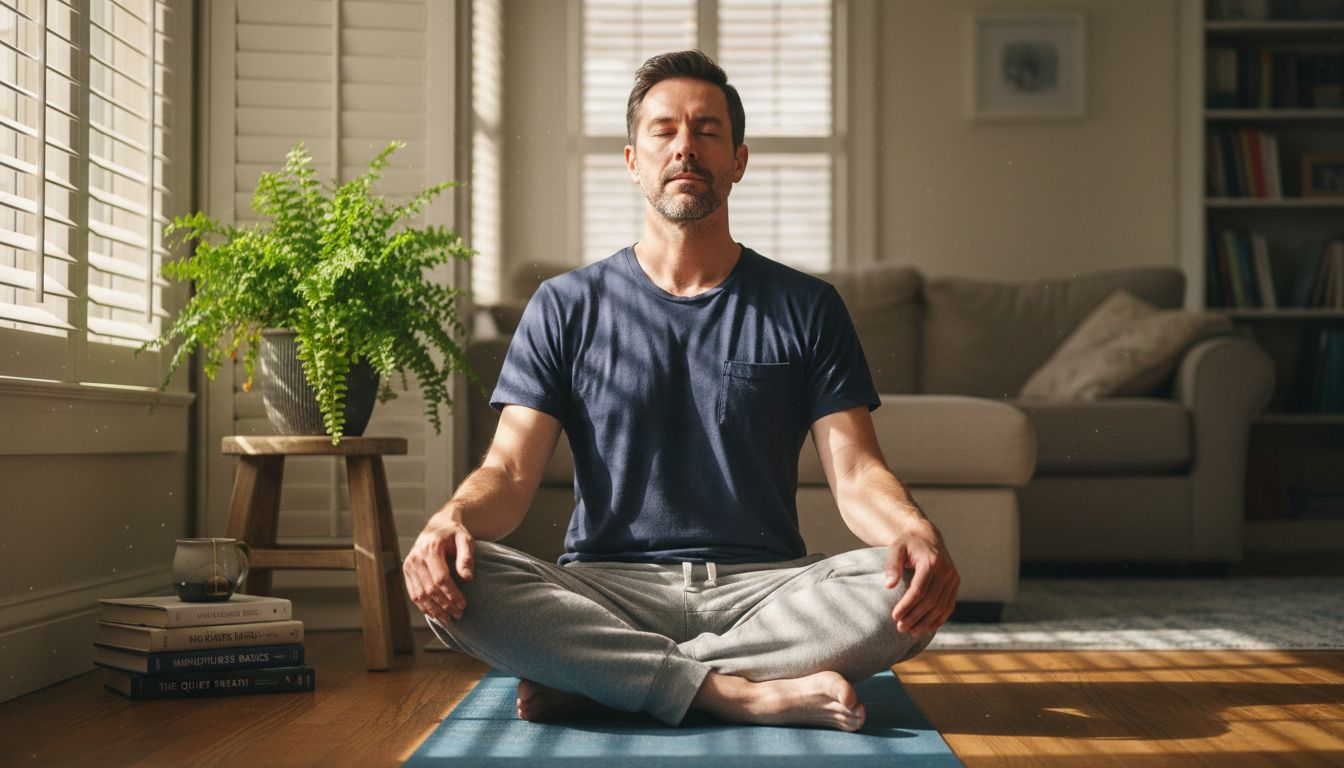
Yoga practitioners report experiencing flow in 77% of sessions, an remarkably high rate compared to other activities. The combination of breath control, physical challenge, and mindful attention hits all the criteria for reliable flow induction. Each pose requires precise adjustments that keep you fully present.
Tai chi produces similar results, with 70% of sessions inducing flow states. The slow, flowing movements demand complete concentration on body positioning and weight transfer. Unlike faster exercises, tai chi’s pace allows continuous awareness of subtle sensations, deepening the meditative quality.
Both modalities deliver lasting stress reduction benefits. Regular practice reduces stress by up to 33% long term, not just during sessions. This permanent improvement in stress resilience supports emotional balance more effectively than temporary relaxation techniques.
Movement-based flow activities offer unique advantages for people with restless minds. Physical engagement satisfies the need for activity while still cultivating the focused awareness central to meditation. You’re moving and meditating simultaneously.
The challenge-skill balance in yoga and tai chi naturally scales with your ability. Beginners work on basic poses and movements. Advanced practitioners explore complex sequences and subtle energy work. This built-in progression prevents plateaus and maintains flow as you develop.
These practices integrate seamlessly with other meditation techniques. Morning yoga can prepare your body and mind for seated meditation. Evening tai chi releases accumulated tension from the day. Combining movement and stillness creates a balanced approach to emotional balance that addresses multiple aspects of wellness.
Flow activities using sound frequencies and brainwave synchronization
Sound-based meditation techniques offer a technological shortcut to flow states by directly influencing brainwave patterns. Instead of relying solely on mental discipline, you use audio frequencies to guide your brain toward optimal flow frequencies.
Binaural beats work by playing slightly different frequencies in each ear. Your brain perceives the difference as a third tone and begins synchronizing its activity to match. Frequencies between 8-14 Hz increase flow by 50% compared to meditation without sound support. This alpha to low beta range matches the brainwave signature of flow states.
Guided meditation incorporating sound frequencies outperforms silent practice for flow induction. Studies show guided sound meditation achieves 35% higher flow rates than unguided silent sessions. The combination of verbal guidance and frequency entrainment creates dual support for maintaining focused attention.
Brainwave synchronization represents the mechanism behind these improvements. When sound frequencies align brainwaves, you experience enhanced coherence between different brain regions. This integration supports the unified awareness characteristic of flow states.
Sound-based techniques work exceptionally well for beginners who find silent meditation frustrating. The audio provides an external anchor for attention, reducing mind wandering. As your skills develop, you can gradually reduce guidance and frequency support.
Accessibility makes sound meditation appealing for building a consistent practice. You just need headphones and audio files. No special postures, no complex techniques to master. This simplicity removes barriers that prevent people from establishing regular meditation routines.
The scientific backing for sound frequency meditation continues growing. More research confirms what practitioners have experienced: certain frequencies reliably facilitate flow states and deepen meditation. This evidence-based approach appeals to people who want proven methods.
Integrating sound frequencies with other flow activities multiplies benefits. Play binaural beats during journaling sessions. Use guided audio during yoga practice. Experiment with combinations to discover what works best for your unique meditation style.
Comparing flow state activities: effectiveness and accessibility
Understanding how different flow activities compare helps you make informed choices based on your specific goals and current abilities. Each approach offers distinct advantages and tradeoffs.
Activity | Flow Effectiveness | Beginner Accessibility | Primary Benefits |
Guided sound meditation | Very High (35% boost) | Excellent | Easiest entry, brainwave support, combines with other practices |
Creative arts (painting, writing) | High (65% vs relaxation) | Good to Moderate | Emotional processing, creativity boost, expressive outlet |
Yoga | Very High (77% sessions) | Moderate | Physical health, stress reduction, embodied awareness |
Tai chi | High (70% sessions) | Moderate | Balance, stress resilience, gentle movement |
Journaling | High (22% creativity boost) | Excellent | Self-reflection, integration, minimal barriers |
Guided sound meditation leads in both effectiveness and accessibility, making it ideal for beginners or anyone seeking reliable flow induction. The 35% improvement over unguided practice represents a significant advantage.
Creative activities excel at flow occurrence rates but vary in accessibility. Journaling requires only basic writing skills, while painting demands more initial investment in materials and technique development. Both offer high intrinsic motivation once you overcome startup barriers.
Yoga and tai chi uniquely combine flow states with physical health benefits. The high session-to-session flow rates (70-77%) rival sound meditation, with the added advantage of stress reduction that persists beyond practice sessions. However, learning proper form takes time and potentially instruction.
Your choice depends on what matters most right now. Need immediate results with minimal learning curve? Start with guided sound meditation or journaling. Want physical and mental benefits together? Try yoga or tai chi. Seeking creative expression? Explore painting or writing.
Many successful practitioners combine multiple approaches rather than choosing just one. Morning sound meditation might prepare you for afternoon journaling. Weekly yoga complements daily seated practice. Building a varied routine prevents boredom and develops different aspects of flow capacity.
Choosing the right flow activity for your personal growth goals
Matching flow activities to your specific development objectives ensures you invest time in practices that deliver the results you actually want. Generic advice fails because everyone starts from different places with different aims.
If you’re completely new to flow practices, begin with guided sound frequency meditation or simple journaling. These low-barrier activities let you experience flow quickly without frustration. Success in early attempts builds confidence and motivation for exploring more complex practices later.
When creativity enhancement drives your interest, prioritize painting, writing, or other expressive arts combined with meditation. The 22% creativity boost from consistent journaling adds up significantly over months. Creative flow activities strengthen divergent thinking and original insight generation that benefits all life areas.
For emotional balance and stress resilience goals, yoga and tai chi deliver unmatched results. The 33% long-term stress reduction creates lasting changes in how you respond to challenges. Physical practices also help if you carry tension in your body or find purely mental techniques insufficient.
As your meditation skills advance, gradually increase activity complexity to maintain optimal challenge-skill balance. What induced flow easily as a beginner might become too simple after months of practice. Progress to more nuanced techniques within your chosen modality.
Pro Tip: Reassess your flow activity choices every three months. Your goals evolve as you grow, and practices that served you well initially might need adjustment or replacement to continue supporting development.
Combine complementary activities for comprehensive growth. Morning journaling processes overnight insights. Afternoon movement meditation releases physical tension. Evening sound meditation prepares quality sleep. This layered approach addresses multiple wellness dimensions simultaneously.
Track which activities most reliably induce flow for you personally. Individual differences mean some people flow easily with creative work while others prefer movement. Honor your natural inclinations rather than forcing yourself into practices that feel like obligations.
Building a sustainable daily routine matters more than perfect optimization. Consistency with good-enough activities beats sporadic practice of theoretically ideal ones. Start simple, stay consistent, and refine based on experience.
Awaken your flow mastery journey today
Ready to transform these insights into lived experience? The research and strategies shared here become truly valuable only when you apply them consistently in your own practice.
Awaken Flow Mastery offers comprehensive programs specifically designed to help you access and sustain flow states for personal growth. Our guided meditation series combines sound frequency techniques, intuitive journaling frameworks, and integration practices developed over a decade of energy work expertise.
The 30-day Awaken Flow Mastery challenge provides structured daily practices that build flow capacity progressively. You’ll experience firsthand how different flow activities enhance creativity and emotional balance when integrated with meditation. Explore how to reconnect with your higher self through guided practices that make flow states accessible regardless of experience level.
Frequently asked questions about flow state activities
What is a flow state and how does it relate to meditation?
Flow represents a mental state of complete immersion and energized focus during skilled activity. Meditation builds the focused attention and present-moment awareness that enable flow, creating a natural synergy between practices. Regular meditation makes accessing flow during other activities significantly easier. Understanding mindfulness vs flow clarifies how these states complement each other.
Which flow state activities are easiest for beginners to start with?
Guided sound frequency meditation and simple journaling offer the lowest barriers for beginners while still effectively inducing flow states. Both require minimal equipment and no prior expertise. These accessible starting points let you experience flow quickly, building confidence before exploring more complex activities like yoga or creative arts.
How does journaling enhance flow during meditation?
Journaling reinforces self-reflection and focused attention, which increases flow depth. Writing organizes scattered thoughts into coherent patterns, strengthening the awareness developed during meditation. Intuitive journaling combined with meditation practice enhances both emotional regulation and creative output more effectively than either approach alone.
How can I measure my progress in achieving flow states?
Track frequency and duration of deep immersion experiences during your chosen activities. Notice improvements in creativity output, problem-solving ability, and emotional calm after sessions. These indirect markers indicate growing flow capacity. Keep a simple log noting when flow occurred and what conditions preceded it to identify your personal patterns.
What are some tips for integrating flow activities into daily meditation?
Schedule regular sessions at consistent times to build habit strength. Vary activities based on energy levels and available time. Use journaling or sound meditation as supplementary practices that deepen your core meditation routine. Start with one new flow activity and master it before adding others. Building a sustainable daily routine matters more than cramming multiple practices inconsistently.
Recommended

Comments